
1. Introduction:
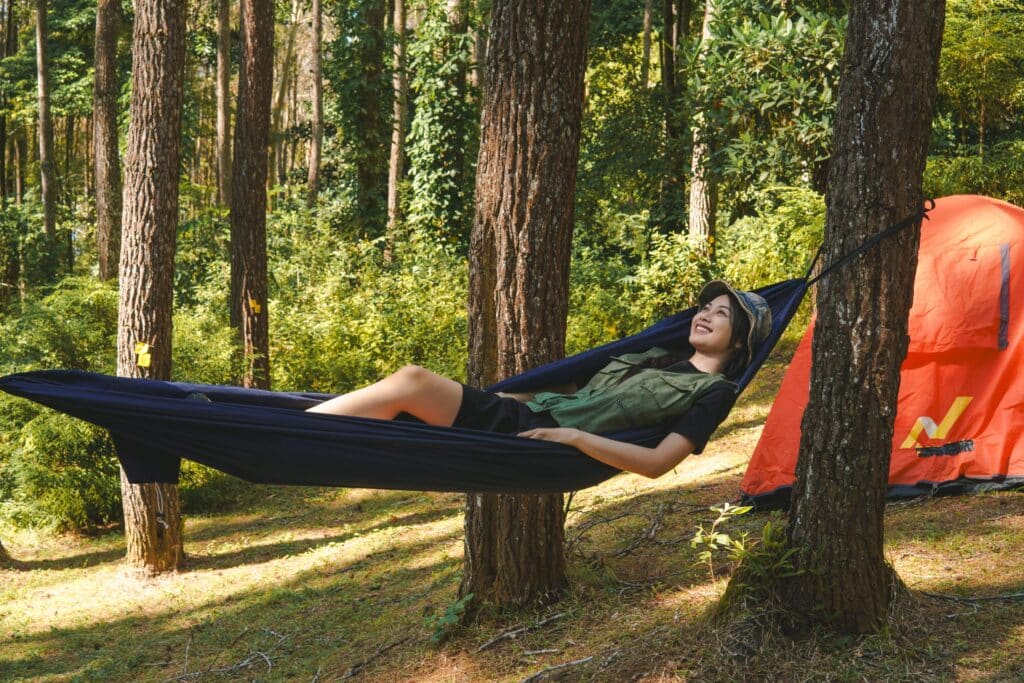
A hammock tent blends the comfort of a hammock with the safety of a tent. It has a cloth bed that is hung from the ceiling and usually comes with a bug net, a rainfly, and an underquilt for warmth. It is made for sleeping off the ground in outdoor settings.
A lot of people look for Hammock Tent rentals first because they want to try this new way to sleep without making a permanent commitment. This is a good way to test your comfort level before buying.
These sets ups are great for camping and other outdoor activities. They raise you above uneven, rocky, or wet ground, keeping you safer from bugs, water, and other animals while giving you better air flow.
The gentle sway and practical lay-flat design (with the right support) make it comfortable. When it’s hot, elevation helps the air flow, and built-in rain protection keeps you safe from the weather.
Travelers and campers who like stuff that is light and easy to pack will like convenience. But renting may not be easy in the USA, based on the tent hire companies and outdoor specialty stores that are nearby.
2. Hammock Tent Rental Reality in the USA:
A lot of hire companies in the U.S. don’t offer specialized camping tents like the Hammock Tent. Most tent rental services focus on big family tents, event canopies, and glamping sets that are rented out a lot.
A lot of it has to do with hygiene and daily use. Close body contact is a problem when hammocks are rented out more than once because they are hard to clean and sanitize.
Logistics costs vs. rental income tip the scales. When things need to be delivered across the country, shipping small, unique items often costs more than the rental fee.
Inventory puts big event tents that make money ahead of individual camping shelters. For groups, festivals, or company trips, companies stock what sells fast.
There are, however, some niche companies. There are times when outdoor gear rental stores in adventure hotspots like Colorado, Maine, or California have hammock systems. These are usually made by Tentsile or Hennessy.
It is still possible to rent, but not everywhere in the country. General tent hire services are less likely to help you find what you need than local searches or specialty firms.
3. When Renting Hammock Tent Makes Sense:
It’s great for short-term needs to rent a hammock tent. It lets you try new things without making a long-term commitment.
Short camping trips are very helpful. You can try delayed sleeping for free on weekend trips or short overnight stays.
outdoor adventures based on travel suit rents. Don’t bring extra gear home with you on road trips or walks with a goal.
Testing for the first time before buying turns out to be smart. Before deciding, try out the setting to make sure it’s comfortable and easy to use.
Short stays outside are good. Weekends at festivals, base camps, or holiday rentals offer better sleep without the bother of owning a place.
For occasional leisure use, hiring is better. Professional gear access saves you money and storage space if you camp a few times a year.
4. When Buying Becomes Better Option:
Buying a hammock tent is a great idea for regular users. Campers who go often quickly recoup their costs through repeated use.
Camping often is a good enough reason to own one. Reliability is gained for regular weekend warriors or seasonal travelers.
Not being able to rent makes people want to buy. When there are no nearby choices, buying makes sure that you can get in at any time.
Self-sufficiency is needed when traveling to remote areas. For trips into the backcountry or off-grid activities, you need reliable personal tools.
Owners gain from making trips at the last minute. There’s no need to wait for inventory or transport delays.
Long-term cost savings show up over time. After the initial investment, there are no ongoing costs—just regular upkeep.
For regular users, on the other hand, renting is enough. But dedicated outdoor fans often like having better.
5. Step-by-Step Buying Process Guide:
There are important choices to make when buying the right Hammock Tent. If you want to succeed, do these things.
To begin, choose the weight limit. Make sure it can hold your weight plus your gear; most can handle 250 to 400 pounds.
Check the strength of the suspension system. Look for straps that will last, guards that won’t hurt trees, and whoopie bands or ropes that can be adjusted.
Make sure the weather protection is good. For cold weather, waterproof rainflies, seams that are sealed, and extra underquilts should be your top priorities.
Be honest about how hard the process is. Select styles that are easy to use, like those that come with built-in bug nets and hanging hardware.
When traveling, make mobility a priority. Pick types that weigh less than 3–5 pounds and have small stuff sacks.
Think about how much room you need. Small packs are easy to store in closets or cars for trips that happen often.
Make a good plan for your money. Don’t forget to add things like straps, tarps, quilts, and other items.
Look into well-known names. Options from ENO, Warbonnet, Hennessy, or Haven have been shown to work well in the past.
6. Rent vs Buy Comparison Table:
| Factor | Renting a Hammock Tent | Buying a Hammock Tent |
|---|---|---|
| Cost | Low per use ($20–$60 per trip) | Higher upfront ($100–$400+) |
| Convenience | Gear delivered/cleaned | Own and ready anytime |
| Availability | Limited to local/specialty providers | Always accessible to you |
| Setup Effort | Simple with included hardware | Learn once, master for life |
| Portability | No need to carry home | Lightweight for backpacking |
| Long-Term Value | Best for rare use | Superior for frequent adventures |
Rent if it’s available in your area for test runs. Buy if renting access is hard to get to or if usage goes up.
7. Cost Analysis (USA Market):
A hammock tent can be rented for $20 to $60 per day or weekend. Specialty stores charge between $24 and $50 for basic systems and more for high-end kits with covers.
Prices to buy things change a lot. Models for beginners cost between $100 and $200. Options of average quality cost between $200 and $350, and the best camping ones cost $300 to $500 or more.
Shipping fees and deposits ($20–$100 based on distance) are extra costs that come up when you rent something. Some service providers charge extra for cleaning.
For rural places, delivery or shipping costs more. These ongoing fees go away when you own your own business.
Savings add up over time when you own a home. Campers who use it often break even after 5–10 rentals and then can use it for free.
Seasonal demand may cause rental rates to go up during the busiest times of the summer or fall weather.
8. Setup & Usage Considerations:
The standards for DIY operation stay the same. It takes most systems 5–10 minutes of practice to learn how to hang between two trees.
Trees usually need 10 to 15 feet of space between them. Strong, healthy trees that are about chest height work best.
For easy transportation, small patterns are best. Light packs are easy to attach to bags or store in car trunks.
For weather safety, the right setting is needed. Correctly angle rainflies and use ridgelines to keep them from falling.
Forested places are part of terrain fit. Stay away from open fields or beaches that don’t have anchor points. If you need to, you can add stands.
9. Best Use Cases:
Hammock tents do well in a variety of outdoor settings.
Camping trips are more comfortable when you’re not around animals on the ground.
Ultralight flexibility is helpful for hiking trips.
Camping in the forest keeps bugs away and lets air flow freely.
Strong stakes or freestanding choices work well at the beach.
Relaxation sets for the backyard let you swing and lounge around.
When you move outside, you learn how to adapt to different types of landscapes.
10. Alternatives to Hammock Tent:
Take a look at these useful choices for renting in the U.S.
Ground camping tents are a common type of floor-based cover that you can rent from many places.
Backpacking tents are light and can stand alone in places without trees.
Pop-up camping tents are easy to set up and take down for short trips.
Tents that you rent for camping are usually good for groups or car camping.
Hammock tents are great for getting some shade and air flow. But there are other options that work better for places without trees or people who like solid ground better.
11. Featured Snippet Q&A:
11.1. In the US, is it possible to rent a hammock tent?
Yes, but not too much. They are available from specialty outdoor rental shops in adventure areas, but most general tent rental shops don’t have them in stock.
11.2. Should you buy or rent a hammock tent?
If you can find one nearby, you can rent it for rare or test use. Buy if you plan to go camping often to make sure you have what you need and save money in the long run.
11.3. Why don’t rental companies allow you to rent a hammock tent more often?
Because of worries about hygiene, low profits on small things, high shipping costs, and a focus on bigger event/group tents, they are not usually found in normal inventories.
12. Frequently Asked Questions(FAQs):
12.1. What kinds of hammock tents can I rent in the United States?
Just specialty outdoor stores in places where camping is popular. If you need to rent gear, you can look for choices locally or online.
12.2. How hard is it to set up a hammock tent?
It gets pretty easy with practice. Finding the right trees and stress is very important for basic models, which take 5–15 minutes.
12.3. Are hammock tents good for all kinds of weather outside?
Yes, as long as it’s well protected from the weather. If you set them up right, they can handle rain, bugs, and wind, but when it gets cold, you’ll need to add an underquilt.
12.4. How long does a hammock tent usually last?
5–10+ years if you take good care of them. Good materials and support don’t get worn down by UV light, wear and tear, and regular use.
12.5. How far ahead of time should I rent or buy something?
During busy times, rentals need two to four weeks’ notice. When you buy something, stores can send it right away or quickly.
13. Conclusion:
If you can find one nearby, renting a hammock tent is a great idea. It makes it easy to get to high-quality gear for short trips without having to worry about storage.
But for regular campers, buying is often the better option. Being an owner makes you ready for last-minute trips and gives you better long-term worth.
First, get in touch with tent hire companies in the U.S. Check with outdoor hire businesses in your area to see what hammocks they have.
If the hammock tents you rent don’t work out, buy a good one. Look around at reputable stores, compare models, and get ready for better outdoor experiences right now—your next trip is waiting!